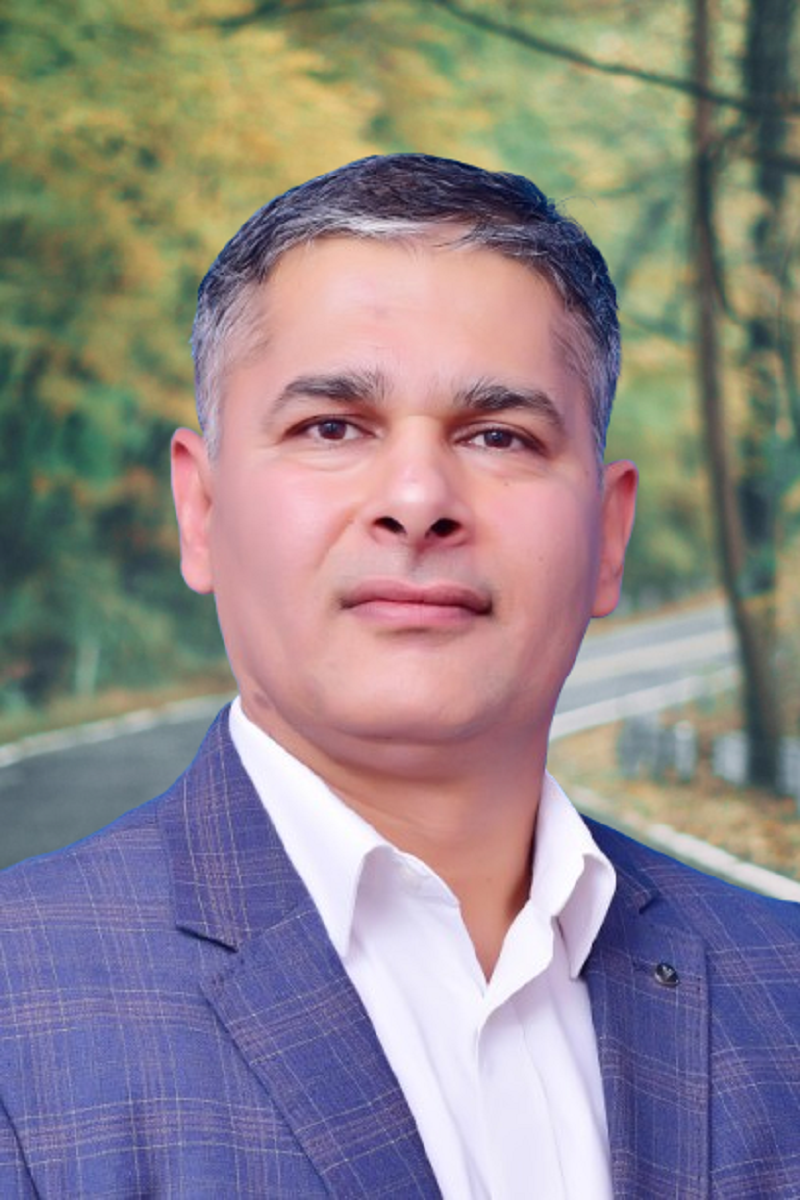
Dr Rajesh Yadav is a seasoned educator with over 20 years of experience in creating innovative and engaging learning environments. Specializing in Cybersecurity, Cyber Threat Intelligence, Digital Forensics, Malware Analysis, Threat Detection, and Ethical Hacking, he combines hands-on experiential teaching with curriculum design to enhance critical thinking and problem-solving skills. He holds a BE, MTech, and PhD in Computer Science and Engineering and has contributed to both national and international academic institutions. He serves as a Lecturer and Senior Tutor at the University of Southampton Delhi, having previously held diverse academic roles across multiple institutions. Dr Yadav’s teaching excellence and contributions to the cybersecurity domain have been recognized with the Excellence in Teaching Award from the University of Southampton Malaysia and the International Educational Achievements Award for his outstanding contributions to the Cybersecurity domain.
Dr Rajesh Yadav is a seasoned academician with two decades of progressive experience in the field of Computer Science, where he has consistently demonstrated excellence as an educator, researcher, and academic leader. Over the course of his career in Computer Science, he has made significant contributions to higher education through his work at reputed national and international institutions, shaping both undergraduate and postgraduate learning environments with a deep focus on innovation, quality, and relevance.
Prior to his current role at the University of Southampton Delhi, Dr Yadav served as a faculty member at University of Southampton Malaysia, where he contributed significantly to curriculum design, program review, and institutional accreditation processes. His international teaching experience has provided him with a diverse and global perspective, enhancing his ability to address the educational needs of students from various academic and cultural backgrounds.
His academic journey is marked by a strong commitment to excellence in teaching, an unwavering belief in the transformative power of education, and a forward-looking approach that integrates foundational computer science principles with emerging technologies. Dr Yadav’s teaching philosophy emphasizes not only the delivery of theoretical knowledge but also the cultivation of practical skills, critical thinking, problem-solving abilities, and independent learning—essential attributes for success in a rapidly evolving technological world. His academic frameworks are aligned with current industry trends and academic benchmarks, ensuring that the learning experience remains both contemporary and comprehensive. His courses are known for blending academic rigor with relevance, making them highly impactful for students aspiring to enter research, industry, or entrepreneurial domains.
He holds a Bachelor of Engineering (BE) in Computer Science and Engineering from Maharishi Dayanand University, MTech in Computer Science and Engineering from Guru Jambheshwar University of Science and Technology, and a PhD in Computer Science and Engineering from Mewar University, India. Dr Yadav’s specialization is in the area of Cyber Security, and he has developed deep domain expertise across a wide spectrum of subfields, including Information Security and Privacy, Malware Analysis, Digital Forensics, Cyber Threat Intelligence, and Threat Hunting. His knowledge is not only rooted in research but also translated into practical applications, as he has played a key role in setting up and managing state-of-the-art cybersecurity laboratories. These labs have served as innovation hubs and hands-on learning centres for students, equipping them with the tools and techniques required to navigate real-world cyber threats.
In addition to his teaching and institutional roles, Dr Yadav is an active researcher and thought leader in the domains of malware analysis, machine learning, and cyber threat intelligence – three areas that lie at the intersection of computer science theory and application. His research explores how intelligent systems can be leveraged to detect, analyze, and respond to cyber threats in real time. He has published numerous papers in peer-reviewed journals and has presented his findings at prestigious international conferences, earning recognition from academic peers and cybersecurity professionals alike
Shalini S., Yadav, R. et al., The present study focuses on improving Cognitive Radio Networks (CRNs) based on applying machine learning to spectrum sensing in remote learning scenarios. Remote education requires connection dependability and continuity that can be affected by the scarcity of the amount of usable spectrum and suboptimal spectrum usage. Journal of Infrastructure, Policy and Development 2025, 9(1), 10466, Jan 2025.
Merugu,S.,Yadav,R., Pathi,V. Raj,H., This study presents a deep learning approach to the image similarity problem as an unsupervised learning task. Journal of Engineering Technology and Applied Science Research, vol. 14, no. 4, pp. 15541–15546, Aug. 2024.
Nicho, M., Yadav, R., Singh, D., The increasing use of powerful evasive ransomware malware in cyber warfare and targeted attacks is a persistent and growing challenge for nations, corporations, and small and medium-sized enterprises., (IJACSA) International Journal of Advanced Computer Science and Applications, Vol. 14, No. 4, April 2023.
Yadav, R., During 2020, Covid-19 was declared as a pandemic, affecting almost every part of societies, because of its impacts economy worldwide faced a big loss which included most of the economic sectors. During that time, technology played a very crucial role worldwide in keeping people connected.”, International Transaction Journal of Engineering, Management and Applied Sciences and Technologies, vol.12, No. 3, March 2021.
Yadav, R., Cyber Security plays an important role in the field of information technology .Securing the information have become one of the biggest challenges in the present day, International Journal of Advanced Research in Science and Engineering, vol.09, No.4, April 2020.
Yadav, R., Today botnets have become one of the biggest risks in the network and security world and have been an infrastructure to carry out nearly every type of cyber-attacks as they provide a distributed platform for different illegal activities like launching the distributed denial of service attacks (DDoS), International Journal of Advanced Technology in Engineering and Science, vol 08, No.3, March 2020.
Yadav, R., “5G Authentication Protocol”, International Journal of Advanced Research in Science and Engineering, vol. 08, No.12, Dec 2019.
Yadav, R., Srinivasan, S., For wide area wireless networks, Mobile WiMAX has come up as an emerging technology. Based on Orthogonal Frequency Division Multiple Access (OFDMA), mobile wimax provides high speed Internet access to the subscribers within a coverage area of several kilometres in radius International. Journal of Engineering Research and Technology, vol. 3, No. 12, Dec 2014.
Yadav, R. Merugu, S., Nikaukar, Y., Raj, H., “Malware Analysis and Detection”, Springer 7th International Conference on Smart Computing and Informatics, April 8-9, 2025, Sunway University, Malaysia.
Yadav, , Singh, D.,“ Malware Analysis and Reverse Engineering: Unraveling the Digital Threat Landscape”, International Conference on Recent Advancement in Engineering Management and Technology(ICRAEMT- 2024), 20 January, 2024,Uttar Pradesh, India.
Saini, , Yadav, R., et al. ,”AI in Healthcare: Navigating the Ethical, Legal, and Social Implications for Improved Patient Outcomes”, 2023 International Conference on Data Science and Network Security (ICDSNS), IEEE, 28- 29 July, 2023,Karnataka, India.
Yadav, R., Singh, D., “A Comprehensive Study and Implementation of Memory Malware Analysis with its application for the case study of CRIDEX”, International Conference on Intelligent Cyber Physical Systems and Internet of Things (ICoICI 2022), springer “Engineering Cyber-Physical Systems and Critical Infrastructures”, 11- 12 August 2022.
Yadav, , “Botnet Threats/Attacks and Botnet Detection, Prevention Methods”, Proceedings of Virtual International Award Conference on Multi-Disciplinary Research and Innovation, November 2020, Punjab, India.
Yadav, R., “Cyber Security Challenges”, Proceedings of Fourth International Conference on New Horizons in Science, Engineering, Management & Humanities, 27 March, 2020, Greater Noida, India.
Yadav, R., “5G Authentication Protocol”, Proceedings of International Conference on Substantial Development in the field of Engineering and Management, Dec 29, 2019, Pune, India.
Yadav, R., Sanyal, S., “Secure D2D Communication in 5G Networks”, Proceedings of the World Congress on Engineering 2018, July 4-6, 2018, London.
Yadav, ,”5G Nano core Technologies”, 4th International Conference on Recent Advances in Engineering, Science and Management, Institution of Electronics and Telecommunication Engineers, Nov. 26, 2017, Chandigarh, India.
Yadav, R.,”5G Wireless Communication Technology”, 4th International Conference on “Innovative Trends in Science, Engineering and Management” (ICITESM-17), Centre for Development of Advanced Computing, June 17,
Yadav, R., “Challenges and Evolution of Next Generation Wireless Communication“, The 2017 IAENG International Conference on Communication Systems and Applications, Hong Kong, 15-17 March 2017.
The research provides the core capabilities and leadership to support the University’s broader security activities. We focus on everything from hardware security to the protection of critical infrastructures. Our industry partners include the Defence Science and Technology Laboratory, Northrop Grumman and Roke Manor Research.
The Cyber Security Academy (CSA) is a hub for advancing security research and providing professional training and consultancy services. We have world-class expertise in all areas related to cyber and physical systems security. This includes chips security, digital forensics, artificial intelligence, and blockchain, which we use to build countermeasures to secure our clients’ infrastructure and educate the next generation of cyber security professionals.
The ECS Education Group brings together all the Teaching Fellows within Electronics and Computer Science; our aim is to support a culture of excellence in ECS teaching, create an educational environment of continuous improvement, and foster innovation in our teaching and assessment methods.