
Decision making for students: Choosing your path in an uncertain world
The beginning of choosing. One of the most important skills young people develop is decision making for students, especially when choosing a university, career path, and future direction. The first big decision I made for myself was nearly fifteen years ago, when my parents were looking for a school to kickstart my formal education. Choosing […]
The beginning of choosing.
One of the most important skills young people develop is decision making for students, especially when choosing a university, career path, and future direction. The first big decision I made for myself was nearly fifteen years ago, when my parents were looking for a school to kickstart my formal education. Choosing an educational institution at any level entails a lot of preparation and contemplation, for the weight of making a wrong decision often outweighs the chance of striking the right one. After all, education is one of the earliest big decisions in life. For nearly fifteen years there weren’t many doubts, and my institution delivered on its promise; by the time I matriculated, the school stood among the better schools in the city.
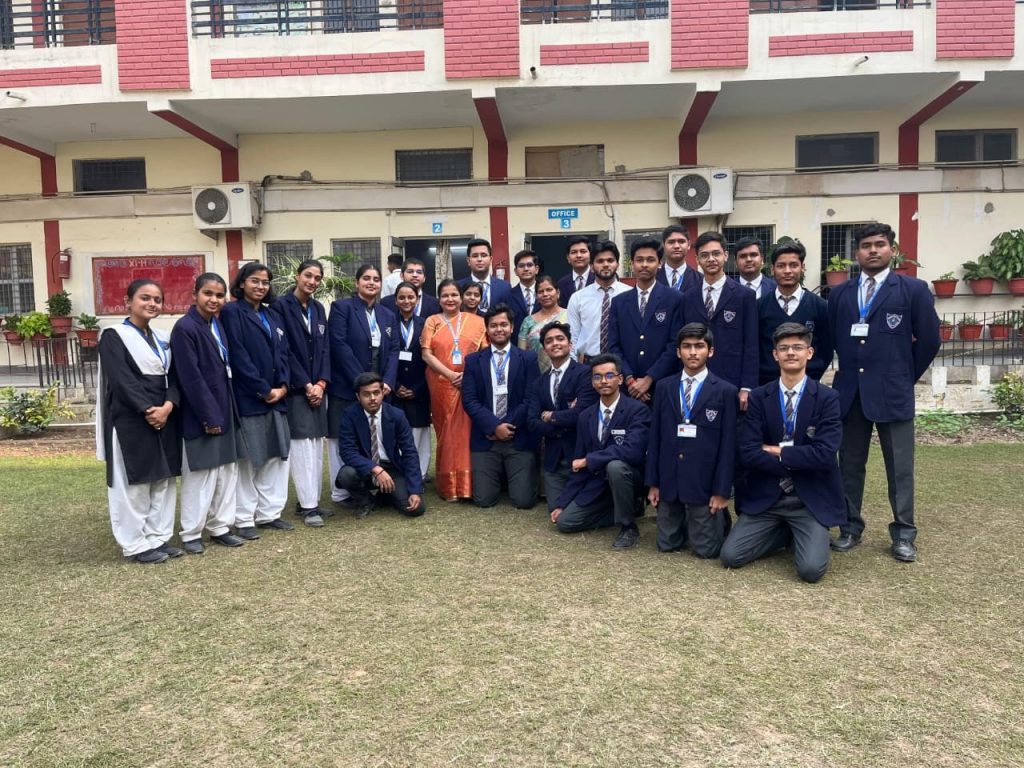
But towards the penultimate years I had a bigger decision to make. At the start of senior secondary, I had to decide which path to take, which profession to pursue, and, in the Indian context, “which examination” to prepare for. Would I end up joining the rat race or create a league of my own? Mark Twain comes to mind when he said, “I have had a lot of worries in my life which never happened.”
From an early age, I held the belief that technology, specifically computer science, was an area of great interest and natural inclination for me. Luckily, I was not too bothered about choosing a profession but choosing a university and the steps that followed to get that acceptance letter had me anxious, stressed, and at times overwhelmed. Thinking back, I recall the countless scenarios my mind painted, juggling me from one continent to another. Independent decision-making taught me that you must trust your decisions yourself before you can make others understand them.
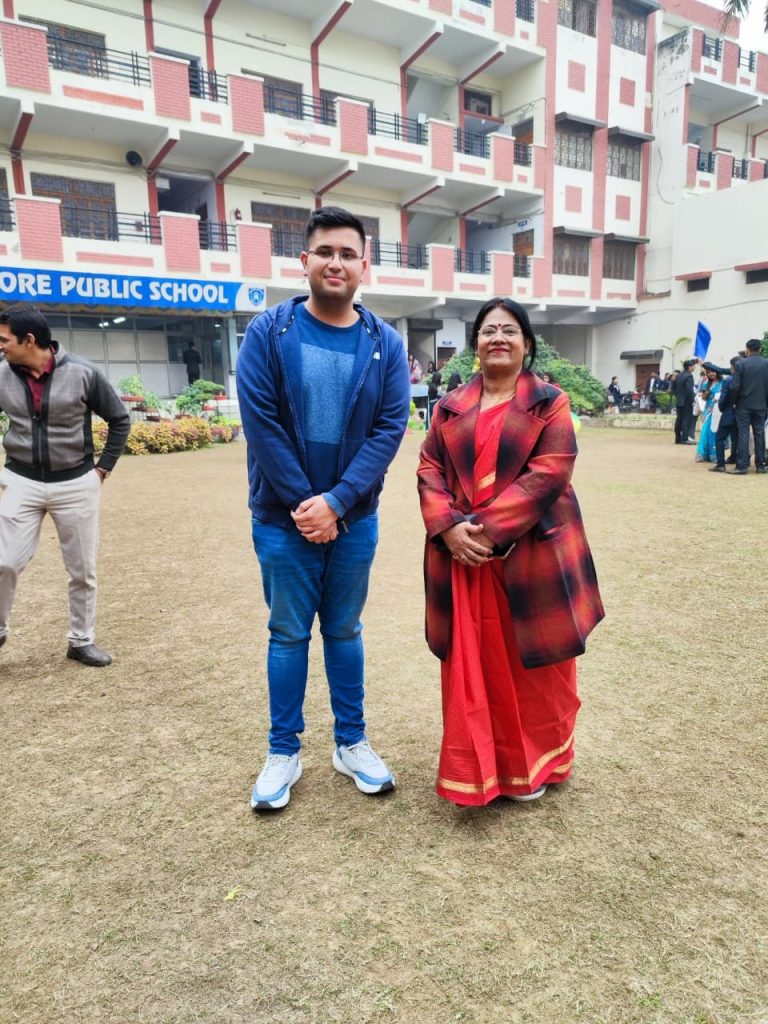
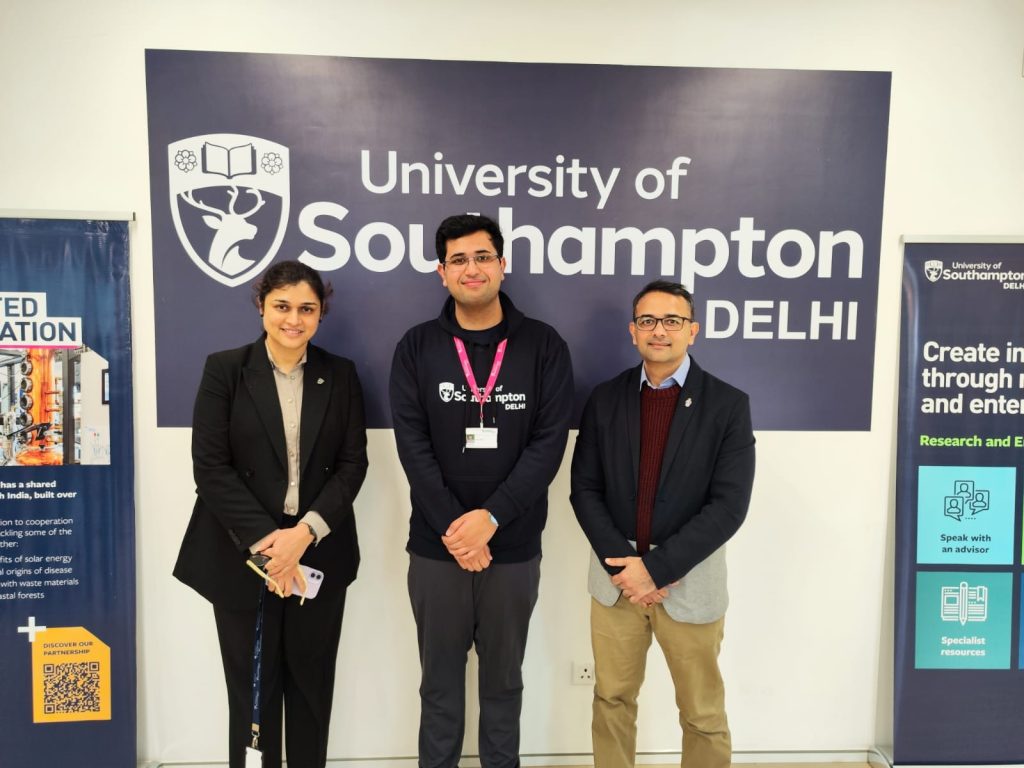
Among the many people I spoke to, my teachers were the first. Their experiences and advice helped me see things more clearly. As I dedicated the months of October, November, and December of 2024 to meticulously preparing my admissions for foreign universities, navigating through the Common App and UCAS forms, and anxiously checking application portals, I realised the true value of perseverance and determination. The first quarter of 2025 seemed to stretch endlessly, largely due to the weight of board examinations, but also passed by in the blink of an eye. One fine day my father suggested I apply to the University of Southampton, which was starting its first cohort that year at the Delhi campus. I did and a few days later I got the acceptance letter.
When popular isn’t personal
To say the least, this was the start of an era of intense decision-making, contemplation, and consultation. Learning to make decisions as a student also means learning from mistakes. One of my biggest lessons came from joining a JEE preparation academy that I eventually left midway because of institutional problems. That experience taught me that the most popular path is not always the right one. Making big decisions should come from personal conviction, not popular opinion.
Although computer science is one of the most sought-after subjects, I never wanted to pursue it through the traditional Indian engineering route. The typical BTech route, and even some BSc programs, felt too theoretical for what I wanted. Partly due to academic preferences and pragmatic factors, I chose the University of Southampton with a heart full of determination and a mind full of uncertainty and fear of the unknown: What kind of people will I meet? Will I make friends? Will I like the university? Would I end up being a guinea pig? When we think of life as a continuous chain of events, every choice begins to feel heavy, as if one wrong link could break the chain. That is what made this decision feel so difficult. Looking back, someone said to me that life is not sequential but rather consequential and that stayed with me.
Why decision making feels so heavy
At the juncture of making big decisions, a myriad of thoughts cross your mind, bombarding you with fears. The human brain naturally focuses on what could go wrong. The fear of disappointing family can be overwhelming. Their support nurtures us, and we want to make them proud. Even the smallest setback can make you feel you’ve let them down. You worry about the consequences of something you haven’t even started. The cherry on the cake is comparing yourself to friends: peer pressure. The so-called the digital corridors of social media also haunt you: the constant portrayal of picture-perfect but hollow influencer lives makes you feel behind in a race you never agreed to run. Everyone moves at their own pace. No one is simply ahead or behind. Perhaps that’s why decision-making skills and building confidence for students are pivotal assets in an era of social validation.
A few days ago, I was part of an AI panel discussion. Students asked whether specialised learning agents might eventually allow people to study entirely from home, making universities unnecessary. The response was simple: university is not only about academics. It broadens your horizons if you allow it to. University is often where many people grow the most, in novel places, among new people, and sometimes in entirely new countries. The uncertain adolescent gradually turns into an independent adult. That growth is both personal and social. In some ways it resembles unsupervised learning in AI models. Students gradually learn through experience: budgeting, choosing modules, managing time, deciding who to spend time with, and setting boundaries. These choices may seem small at first, but over time they shape your personality. As Lord Chesterfield rightly said, “Take care of the minutes and the hours will take care of themselves.”
The detour I didn’t expect
In my transition to university life, there were many expectations and assumptions. I was thinking rather too rigidly; while that approach sometimes helps, it is always wise to keep a backup plan. I remember staring at the results screen, refreshing it twice before finally accepting the number in front of me. My average had fallen short of the 95 marks I had hoped for, and at the time it felt like a crushing setback.
When one works hard for something, it is natural to expect a desirable outcome. When things go south, it hurts deeply because the plans built around those expectations begin to crumble. In my case, this meant letting go of some of my admits. At that point I felt deeply disappointed. For a moment it felt like a lukewarm victory: something where one cannot grieve openly, nor celebrate wholeheartedly.
I was angry at myself and frustrated with how things had turned out, because I had truly left no stone unturned. But there is only so much one can control. It felt a little like being 99 next to 100 painfully close, yet still incomplete.
Looking back now, I realise it taught me to set more realistic expectations. It also taught me that when things do not go exactly as planned, it is not always failure. Sometimes it is simply a detour that asks us to rethink our path. If we truly desire something and continue to work toward it, we often reach it eventually, and when we do, we appreciate it more and understand the responsibility that comes with it.
Balancing head and heart
Human beings learn from many sources, their surroundings, mentors, and past experiences. Among these, past experiences often shape our decisions the most, while the environment around us also plays a significant role. I have always been close to my teachers, and I still reach out to them or to my seniors to discuss situations and hear their perspectives. One does not need to accept everything as absolute truth, but a third person’s viewpoint often helps in understanding a situation more clearly.
Apart from discussing things with others, I try to see how a decision fits into the larger picture. I often read about others’ experiences and take a broader, bird’s-eye view before deciding. This helps reduce the extra pressure we sometimes create when we become too narrow in our thinking.
Making big decisions often feels like a quiet negotiation between logic and instinct. At times I try to choose a balanced path that reduces future regret, because both acting and not acting can lead to it. No decision is guaranteed to be the right one, and sometimes you simply must take a risk, depending on how much uncertainty you are willing to accept.
Realising it’s your life
Although I stand at the closing years of my teenage life, I think making decisions in your twenties is difficult because you have lived long enough to gain some experience, but not long enough to fully understand it; or to learn entirely from the experiences of others.
When I began writing this, I did not realise how reflective it would become for me, and I hope it serves a similar purpose for anyone reading it. The journey toward independence looks different for each of us, and in truth no one has everything figured out, not even the most confident voices on social media.
Perhaps the best way to deal with uncertainty is to move with it. Stagnant water gathers algae, while flowing water stays fresh. Life works in a similar way. Change is inevitable, and we can either move with it willingly or be pushed by it eventually. When the pressure to change comes from within, growth follows; and that is something to be proud of.
Independent decisions bring accountability, but learning to make big decisions has not made life easier; it has made it mine. That sense of ownership stays with you.
I end this piece with a line by William Ernest Henley:
“I am the master of my fate,
I am the captain of my soul.”
Realising that life comes from you, not at you, takes time.
Author: Arnav Mishra, First year, BSc (Hons) Computer Science
Date: Tuesday 17 March 2026
This article reflects the thoughts, opinions and experiences of the author, and do not necessarily represent the official view of University of Southampton Delhi. You should confirm and check factual information presented in this article before making decisions based on its content.