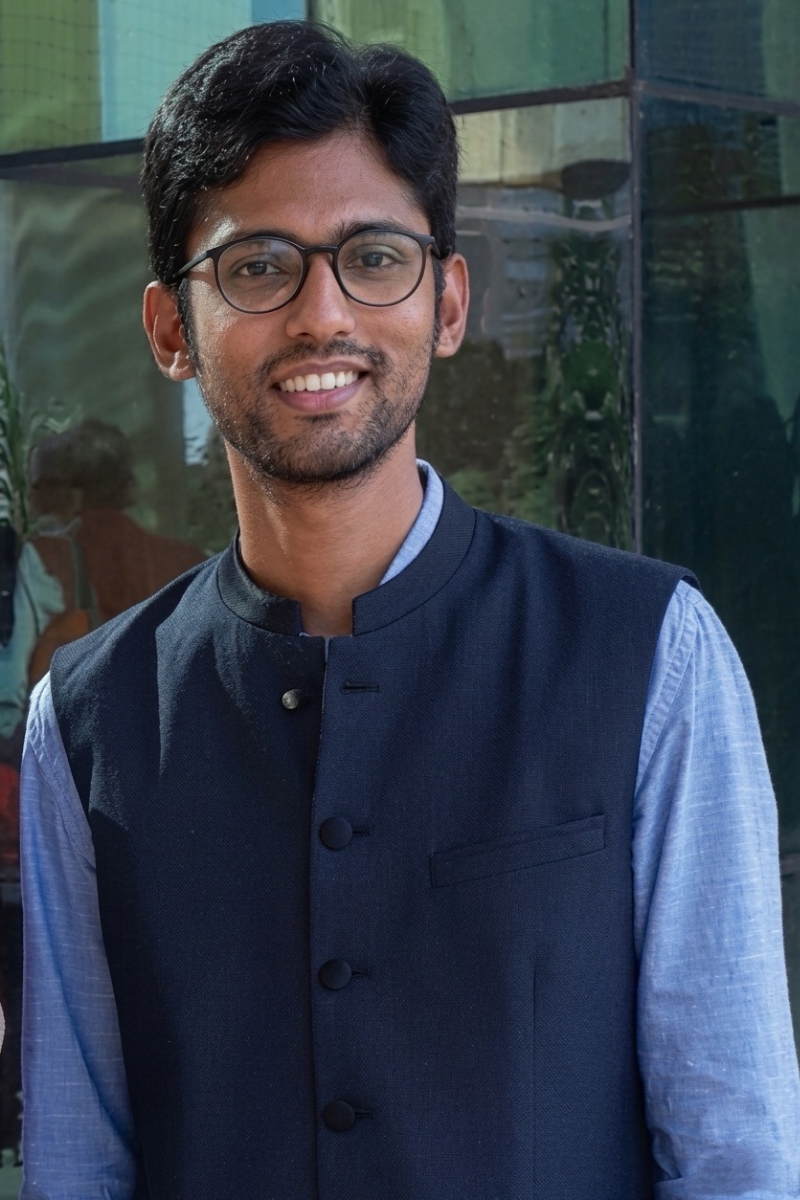
Dr Shagata Mukherjee will be joining as an Associate Professor of Economics at the University of Southampton, Delhi. He has previously served as the Deputy Director at the Centre for Social and Behaviour Change, Ashoka University, Lead of the Behavioural Insights Unit of India at the National Institution for Transforming India, NITI Aayog and Associate Professor at the Meghnad Desai Academy of Economics. He holds a Master’s Degree and a PhD in Economics from Georgia State University, USA. He also holds a Master’s in Economics from Jawaharlal Nehru University (JNU) and a BSc in Economics from Presidency College, Calcutta University. His research lies at the intersection of Behavioural and Experimental Economics, Development Economics and Public Policy. He was the recipient of the 2020 Vernon Smith Young Talent Award in Experimental Finance for his research on gender and microfinance. His papers have been published in leading international journals such as the Journal of Economic Behaviour and Organization (JEBO) and Nature Scientific Report among others.
Dr Shagata Mukherjee holds a PhD in Economics from Georgia State University, USA. He also holds a Master’s in Economics from Jawaharlal Nehru University (JNU), a second Master’s Degree from Georgia State University and a BSc in Economics from Presidency College, Calcutta University.
His research interests are in the fields of Behavioural and Experimental Economics, Development Economics and Public Policy. His work uses a wide range of methodologies such as Randomized Control Trials (RCTs), Lab-in-the-field Experiments, Quasi-experimental methods like instrumental variables and statistical matching as well as qualitative methods to study policy relevant questions. He has received several research grants from international organizations such as BRAC Institute of Governance and Development, British Academy, Gates Foundation, University of Erfurt, Georgetown University, and the Center for Economic Analysis of Risk (CEAR), J. Mack Robinson College of Business, Georgia State University.
His research has been published in leading academic journals such as the Journal of Economic Behavior and Organization (JEBO), Nature Scientific Report among others. He has co-published several policy reports with the Department of Drinking Water and Sanitation, Ministry of Jal Shakti, and the Development Monitoring and Evaluation Office, Government of India. He has also contributed to the World Bank and WHO report on Behavioral Science around the World, Volume III (Public Health). He has served as a referee for leading journals such as the Journal of Economic Behavior and Organization, Journal of Behavioral and Experimental Economics, Behavioural Public Policy, Feminist Economics and Economics Bulletin.
He is an Affiliated Faculty at the Experimental Economics Center (ExCEN), Andrew Young School of Policy Studies, Georgia State University and a Board of Studies Member in Sophia College, Mumbai, India. He was previously an Affiliated Faculty at the Centre for Experimental Social Sciences Nuffield (Oxford) – FLAME and a Visiting Fellow at the Mumbai School of Economics and Public Policy at the University of Mumbai. He has also been a guest faculty at the Institute of Economic Growth where he teaches the Indian Economic Service (IES) officers, and at the Lal Bahadur Shastri National Academy of Administration where he taught the Indian Administrative Service (IAS) officers.
(with Varun Arora, Sujoy Chakravarty, Hansika Kapoor, Shubhabrata Roy, and Anirudh Tagat), Journal of Economic Behavior and Organization (JEBO), Volume 209, May 2023, Pages 533–546
(with Sayantari Ghosh, Saumik Bhattacharya, and Sujoy Chakravarty). Nature Scientific Report. 14, 306 (2024).
(with Anirudh Tagat, Hansika Kapoor, Varun Arora, Sujoy Chakravarty and Shubhabrata Roy). Health Communication. 23 Jan 2022, Pages 1697-1708.
(with Devalina Mookherjee, Sujoy Chakravarty, Shubhabrata Roy and Anirudh Tagat) American Behavioral Scientist. Volume 65, Issue 10, 2021.
Public Finance Review. 2020; 48(6):778-805
(with Sneha Shashidhara and Sharon Barnhardt). In Contextualizing the COVID Pandemic in India: A Development Perspective, 2023 (pp. 225-247). Singapore: Springer Nature Singapore.
A Complex Network-based Simulated Dynamics of Vaccine Hesitancy Behavior in India (with Sayantari Ghosh, Saumik Bhattacharya, and Sujoy Chakravarty)
Experimental Evidence from Rural India (with Misha Sharma, Niyati Agarwal and Akarshik Banerjee)
Empowerment (with Akarshik Banerjee, Sharon Barnhardt and Dinabandhu Mondal)
Evidence from Matrilineal and Patrilineal Societies in India.
Long-Term Impact of Smartphone Ownership on Women’s Empowerment in Rural India (with Akarshik Banerjee, Sharon Barnhardt and Dinabandhu Mondal)
(with Mongoljin Batsaikhan).
(with Sharon Barnhardt, Pavan Mamidi and Selva Swetha)
(with Sujoy Chakravarty, Utteeyo Dasgupta and Nishat Anjum)
(with Sharon Barnhardt and Pavan Mamidi)
(with Dinabandhu Mondal)
(with Mahima Soni)
(with Dinabandhu Mondal)